Months before our trip to Bao Loc, I had roasted lots of Canephora samples in Hanoi—cupping, reviewing, and adjusting with Linh until we landed on a baseline profile. I called it the Canephora Benchmark: a starting point to assess a coffee’s potential and find the brew method it was best suited for.
When we sat down with Mr Tai and Mr Thai, we planned a cupping at the farm to taste this year's harvest side-by-side. Mr Thai kindly gathered a full selection of green samples for us (see ‘1.3 Spoiled for Choice’). Rather than ranking which coffees were "better," we set out to explore four things:
How the coffees tasted side-by-side with the producers
How the cooler Bao Loc climate affected our roasting compared to Hanoi
How differently various quality grades behaved in the roaster
How every grade of coffee serves its own purpose and target market
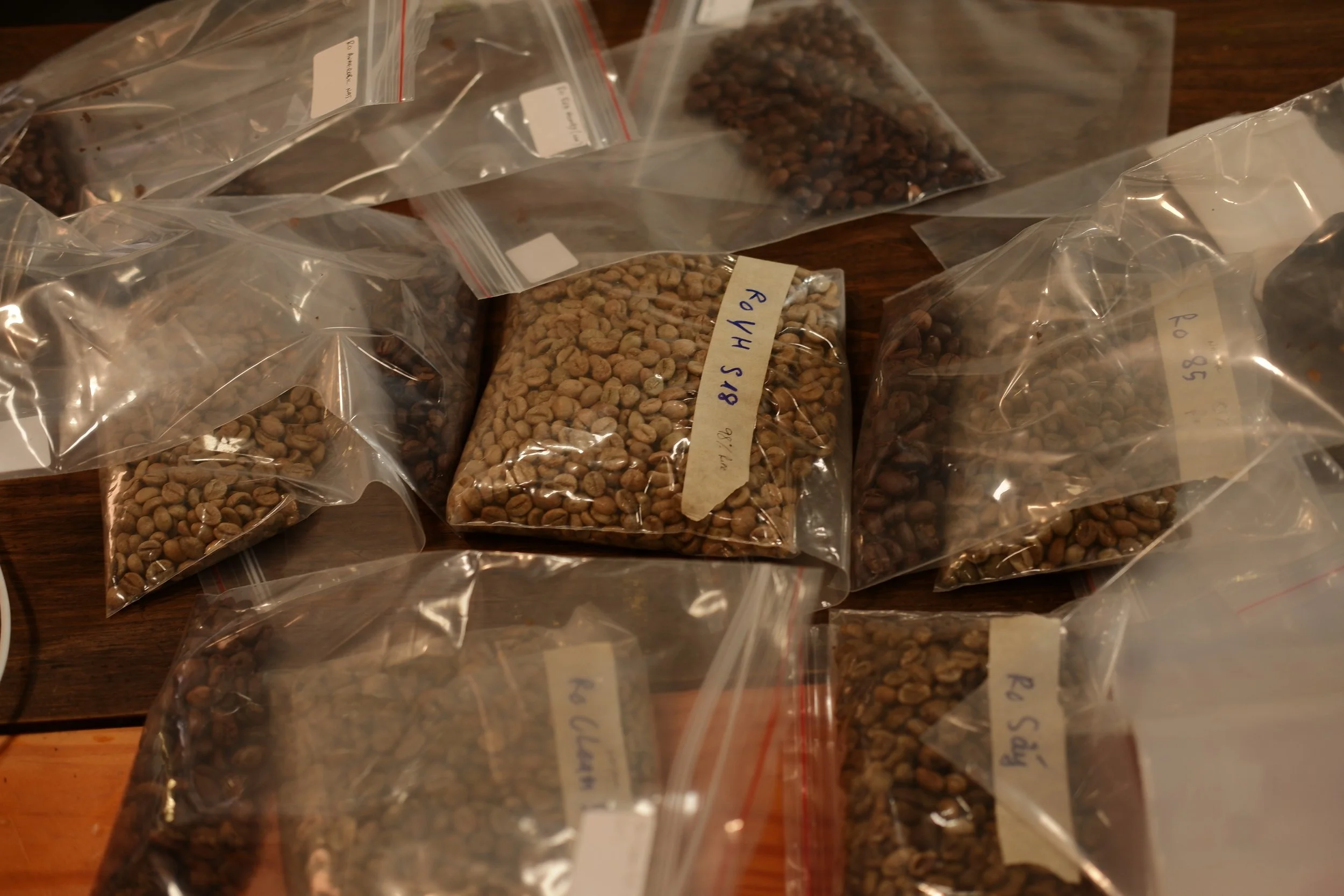
Back at our place in Bao Loc, with the sample batches sorted, I turned on and preheated the trusted Ikawa. I started with the commercial-grade lot, loaded the beans, and immediately noticed something odd: the coffee sat completely still instead of circulating. Commercial-grade lots carry wide variances in bean density, physical defects, and mixed ripeness, making them far less predictable under heat. A slight bump to the airflow and exhaust temperature finally got the beans moving. As I worked my way up through the higher-grade samples, the beans roasted more predictably and without too much intervention.
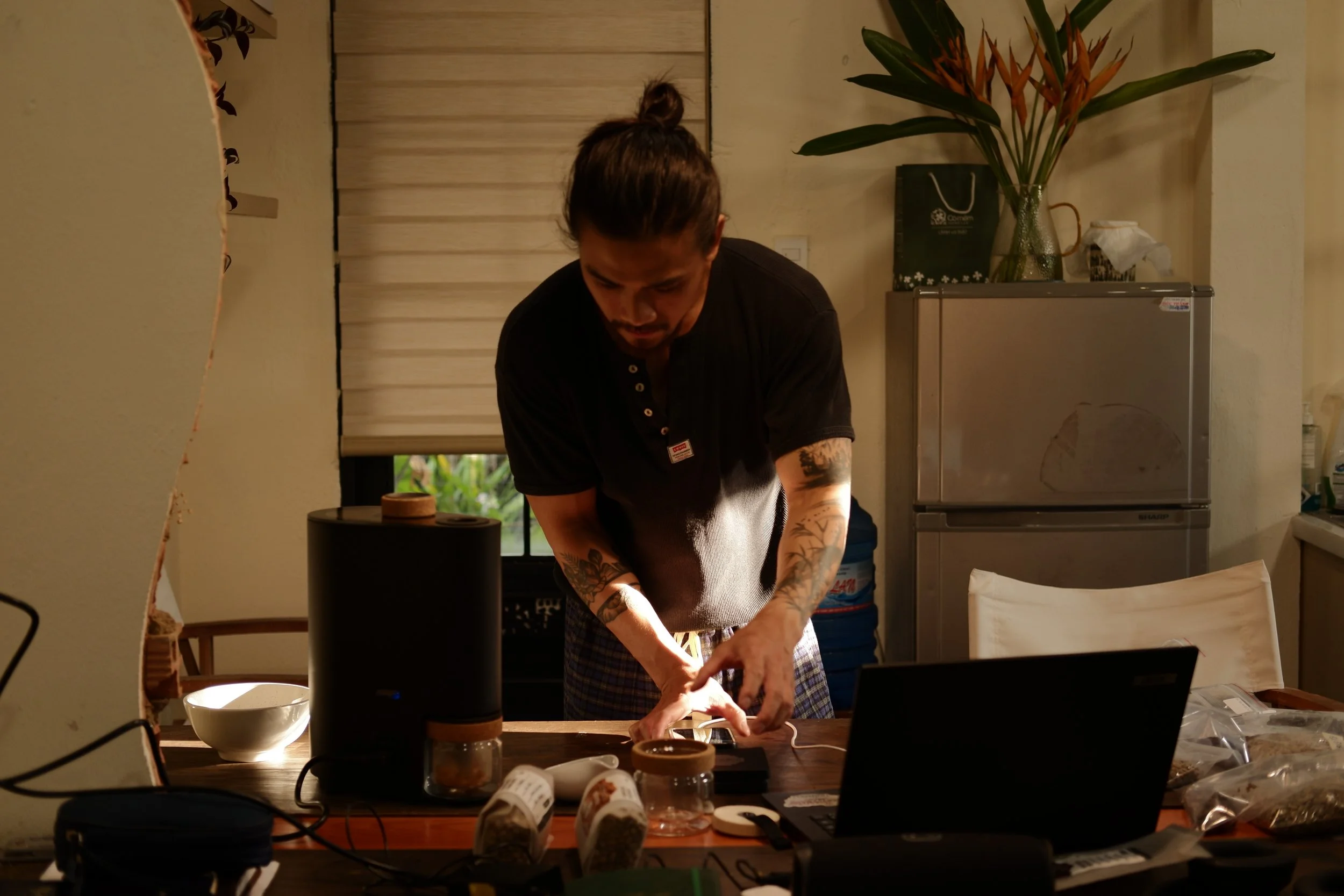
Roasting in Bao Loc’s cooler mountain climate taught me how environment can influence a roast. Compared to Hanoi’s warmer and humid climate (around the time I created the profile), the Ikawa roaster had to work a little differently to maintain momentum – a reminder that a baseline, like the Canephora Benchmark, isn’t a rigid formula, but a starting point to understanding the coffee.
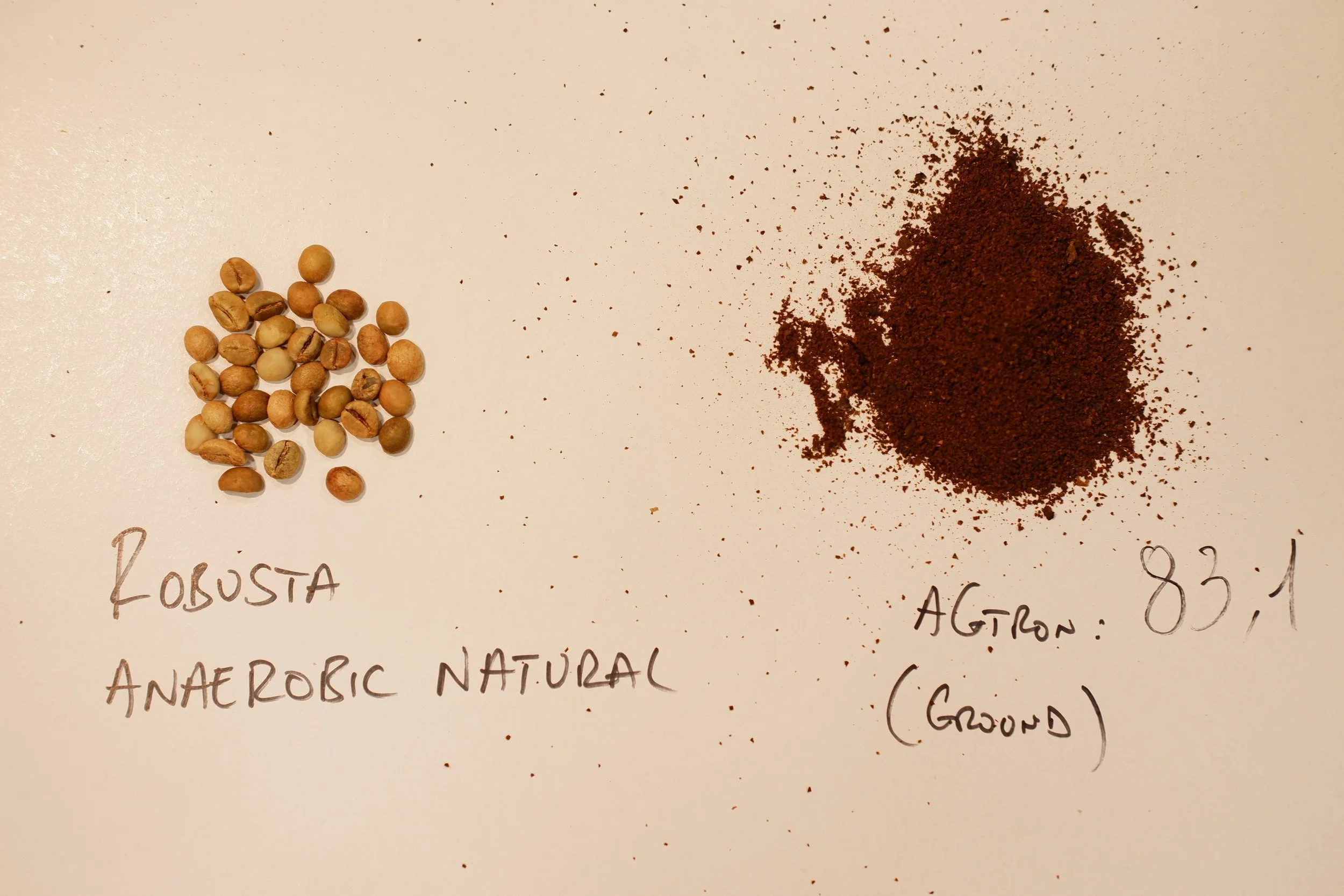
The contrast between the roasted samples became obvious even before grinding. Each grade behaved according to how it was picked, sorted, and processed – not better or worse in isolation, just built for a different role and market. We packed the roasted samples to let them rest for two days, ready to bring them back to the farm and let Mr Tai, Mr Thai and the team taste their harvest side-by-side.